Summary
every figure cited to the datasheet below- Control IC and RGB chips integrated in one 2020 MOLDING package — 2.20 × 2.00 mm body, 4 pads (DO / GND / DI / VDD) with a polarity mark; a complete addressable pixelp.1, p.2
- Single shared supply for LED and controller — absolute-maximum VDD +3.7 to +5.3 V; electricals characterized at VDD 4.5–5.5 V, TA −20 to +70 °Cp.1, p.2, p.3
- 16 mA operating current per channel, from a voltage-programmable constant-current drive — no external ballast resistorsp.1, p.3
- Per-colour output at the 16 mA test condition: red 300–500 mcd at λd 620–630 nm, green 800–1500 mcd at 515–525 nm, blue 200–300 mcd at 465–475 nmp.3
- 256 brightness levels per channel — 16,777,216 colours — at a 2 kHz scan frequency (no flicker on HD video)p.1
- Single-line NZR data at 800 Kbps, 24-bit GRB (high bit first): T0H 220–380 ns, T1H 580 ns–1 µs, T0L 580 ns–1 µs, T1L 220–420 ns, RESET frame >280 µsp.3, p.4
- Built-in signal reshaping re-drives DO at every pixel, so waveform distortion does not accumulate — cascade length limited only by data speed: ≥1024 pixels at 30 fps refresh, up to 3 m between any two points with no extra circuitry; built-in power-on and power-lost resetp.1
- Operating junction temperature −25 to +85 °C, storage −40 to +105 °Cp.2
- Moisture sensitivity MSL 6 — take out of the sealed moisture-proof bag and use immediately (re-bake 70–75 °C before any later SMT pass)p.7
- Supplied on 8 mm carrier tape, 4000 pcs per reel, in an aluminium moisture-proof bag with desiccantp.5, p.6
WS2812B-2020 is a complete addressable pixel, not a bare LED: the constant-current controller and the three RGB dies share one 2.20 × 2.00 mm 2020 package and one supply pin.p.1 Four pads — DI in, DO out, VDD, GNDp.2 — and data is the only design work: a single-line NZR stream at 800 Kbps, 24 bits per pixel in GRB order, high bit first.p.1, p.4 Each pixel latches its first 24 bits, then reshapes and re-drives the rest downstream, so distortion does not accumulate and cascade length is limited only by data rate — ≥1024 pixels at 30 fps, up to 3 m between any two points with no extra circuitry.p.1
The numbers you design against: each channel is driven at a constant 16 mA,p.1, p.3 returning 300–500 mcd red, 800–1500 mcd green and 200–300 mcd blue.p.3 Bit timing is T0H 220–380 ns / T1H 580 ns–1 µs, and the reset frame is a generous >280 µs low — long enough that an interrupted MCU will not false-reset the string.p.1, p.3 Refresh is scanned at 2 kHz, so it holds up on HD video.p.1 The typical application circuit wants a 100 nF filter capacitor on VDD at the pixel.p.4
Two limits are tighter than instinct suggests. Supply: the absolute-maximum rating is +3.7 to +5.3 V — this is a 5 V part with less headroom than a plain LED, and logic thresholds track the rail (VIH = 0.7 VDD), which matters when driving it from 3.3 V logic.p.2, p.3 Moisture: it is rated MSL 6, the most sensitive class — solder it immediately after opening the bag, and re-bake before any second reflow.p.7 Junction temperature is bounded at −25 to +85 °C.p.2
3D Assembly
Static · Pick-and-Place — drag to orbit, scroll to zoomSchematic & Layout
interactive — drag to pan, scroll to zoom, click a pin or pad for detailSchematic Symbol
2D Layout
Datasheet
the source of every number on this page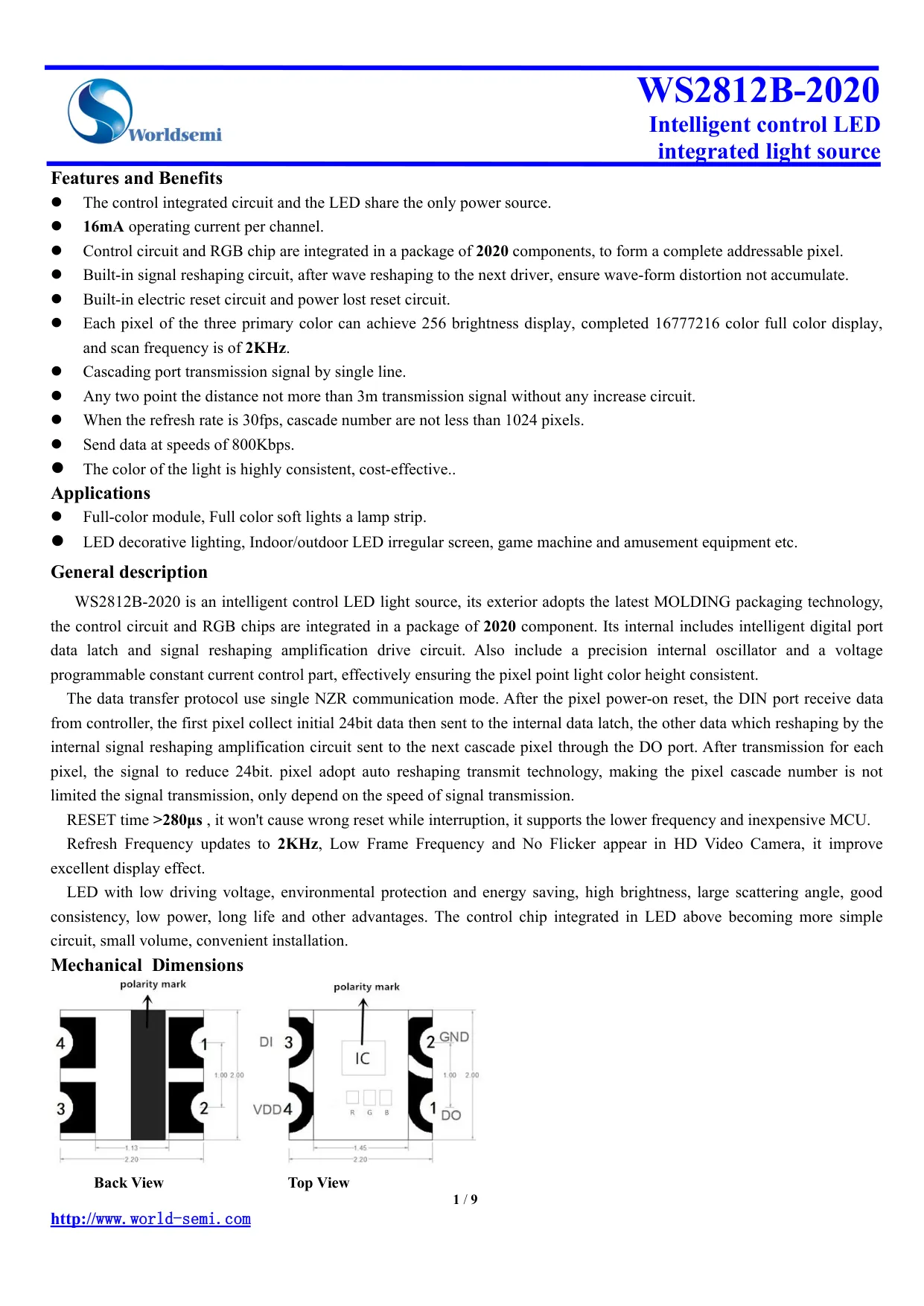 1
1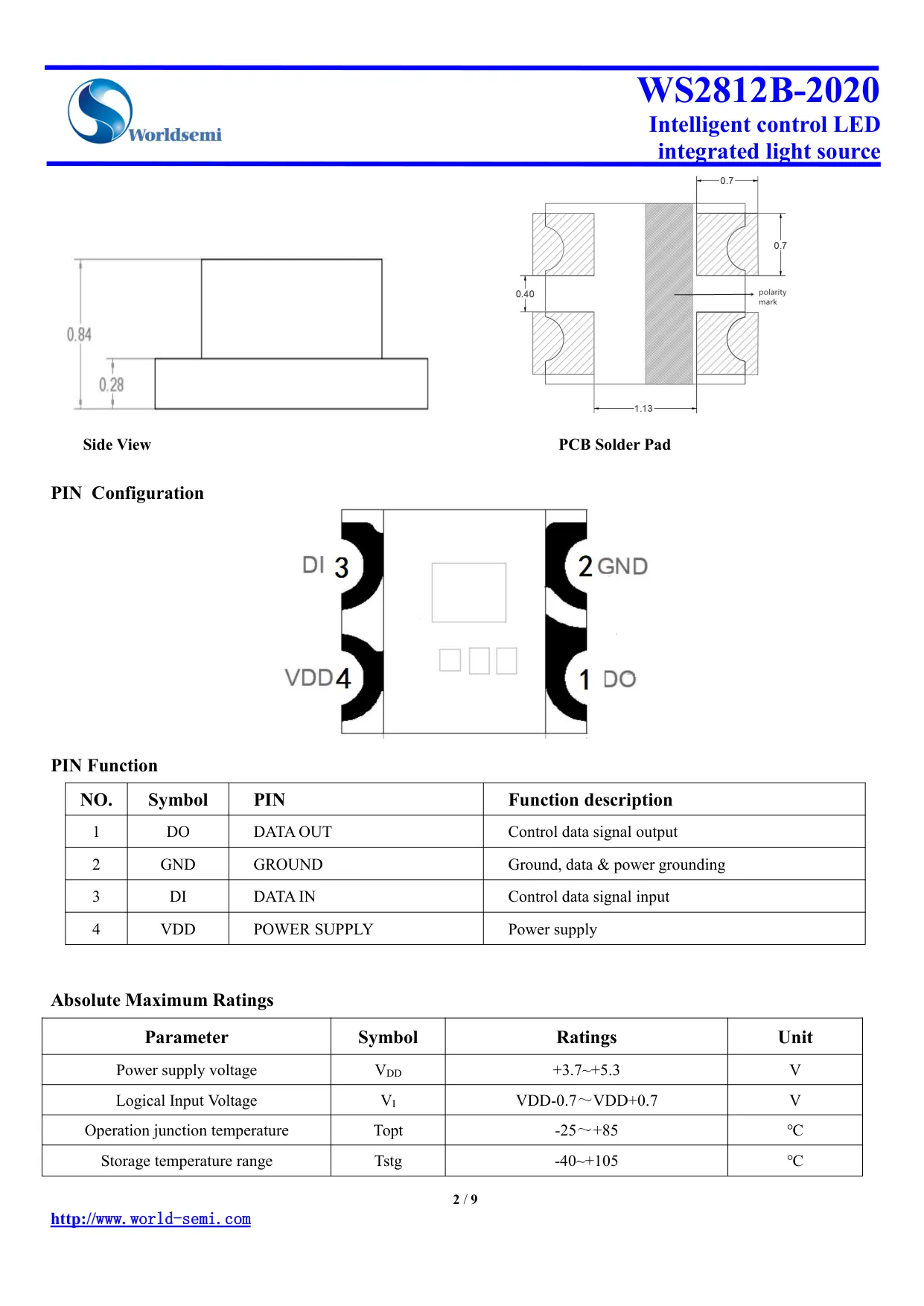 2
2 3
3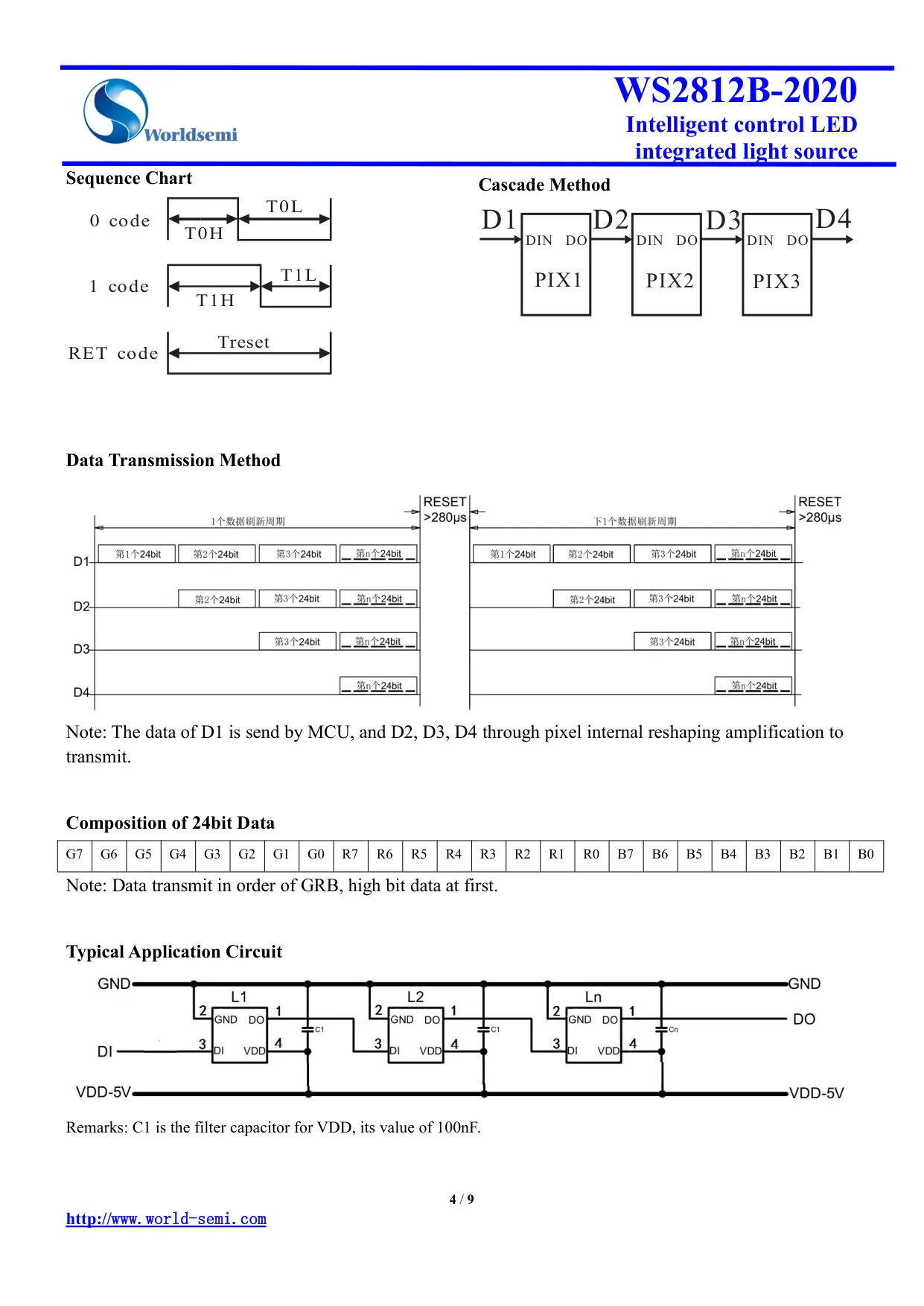 4
4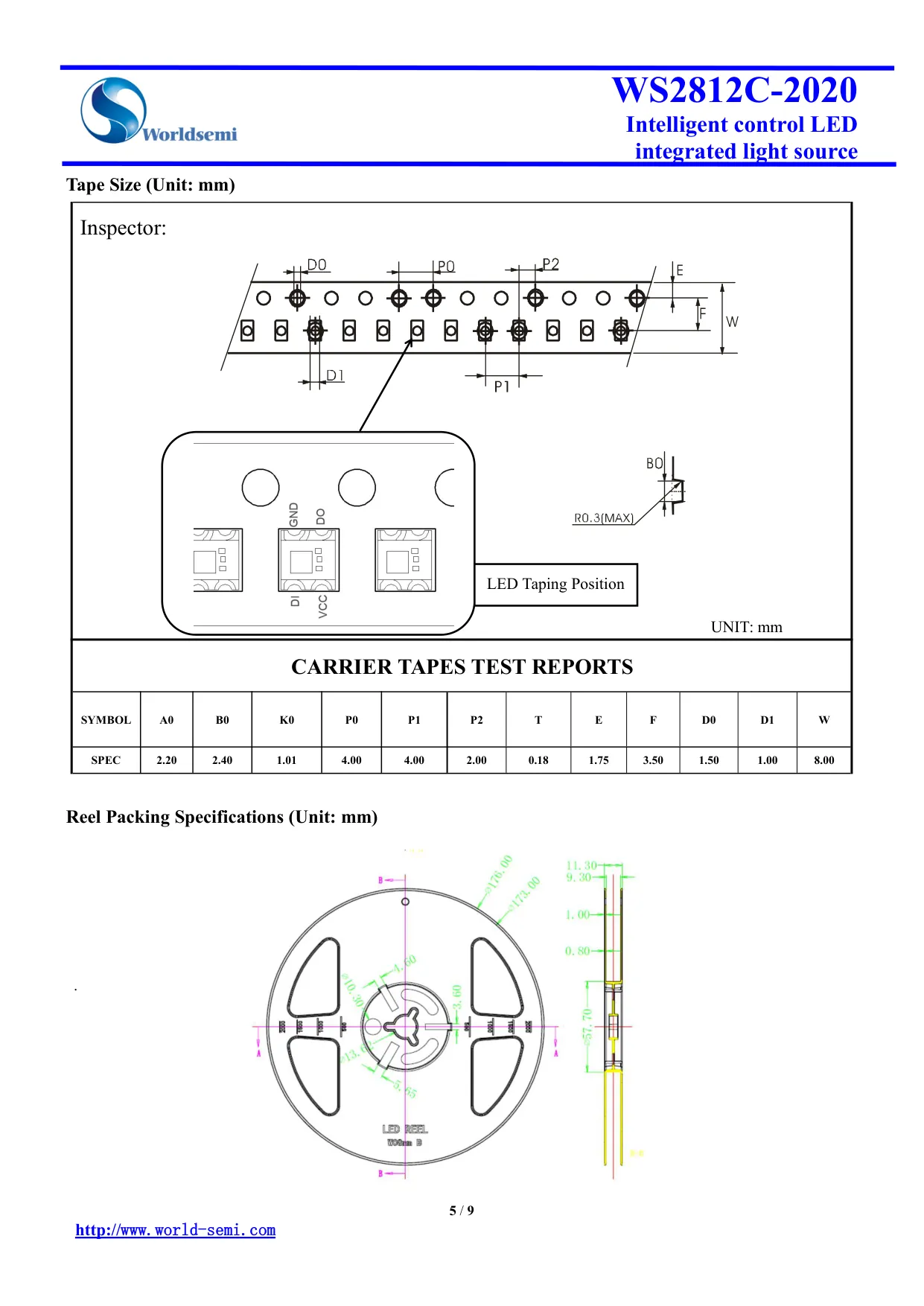 5
5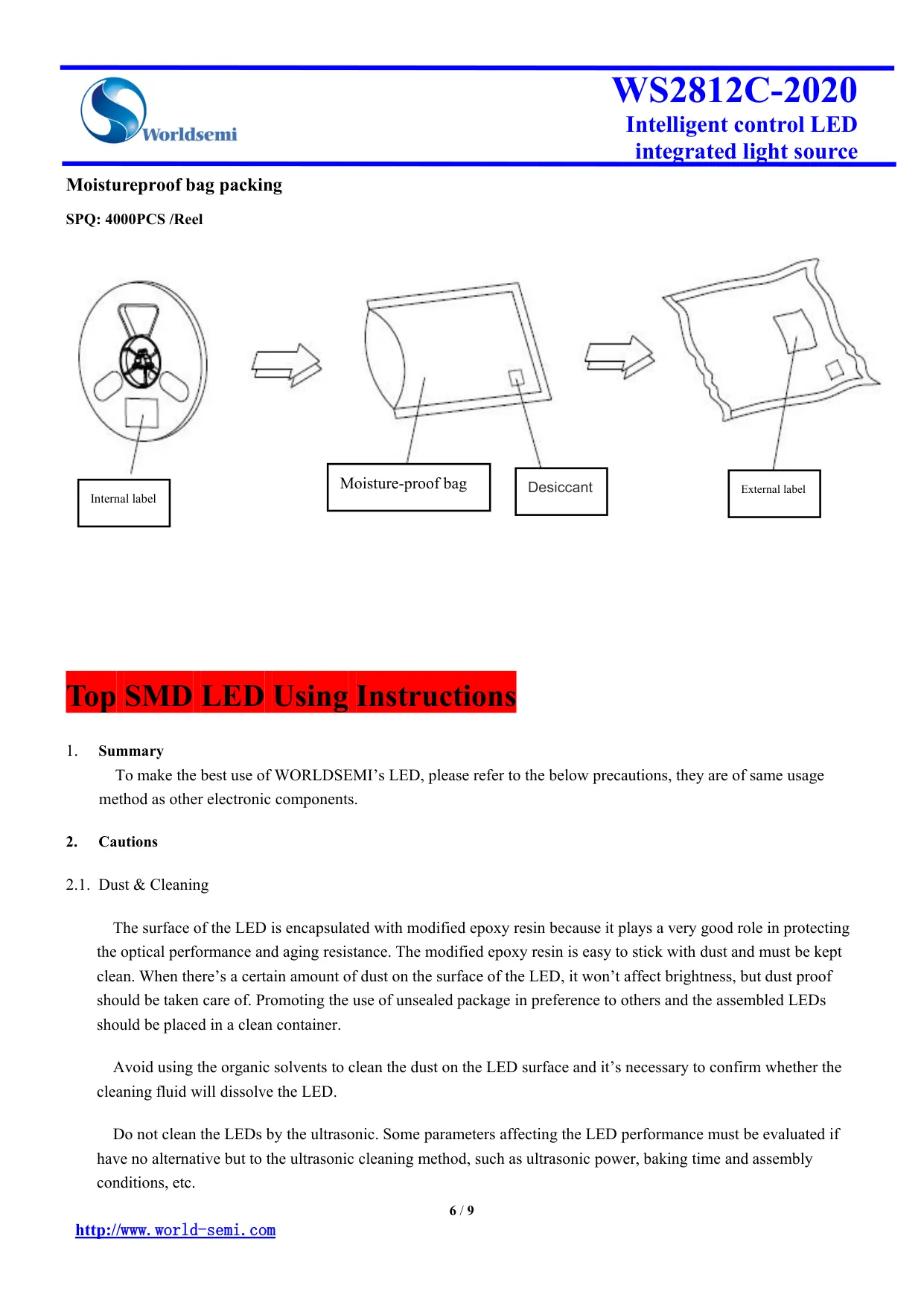 6
6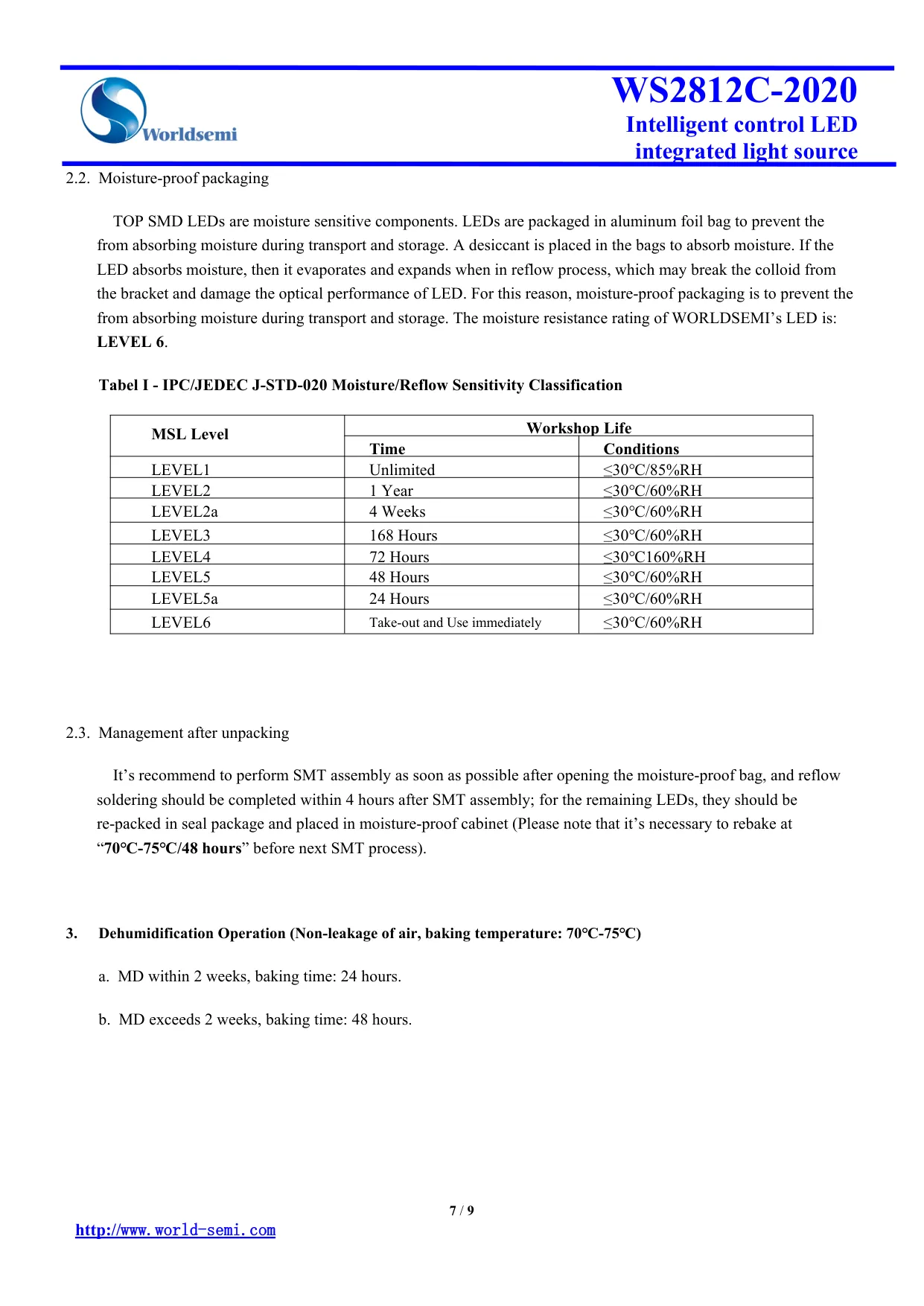 7
7 8
8 9
9md5 1ebe0db441706c68747ba97185d7057d