← Commit history
Show corrected cooler interference and return compact revision to placement
5 files changed
+126−3
docs/compact-r11/README.md+3−3@@ -2,9 +2,9 @@ The compact revision is now in AIFlow. The target is a 72 × 72 mm, two-layer, 1 oz 3rdPartyFab board with large machine pins on a 64 × 64 mm pattern. Board34/R10 remains the preserved previous design. The 5 W firmware limit and existing temperature protections are unchanged. -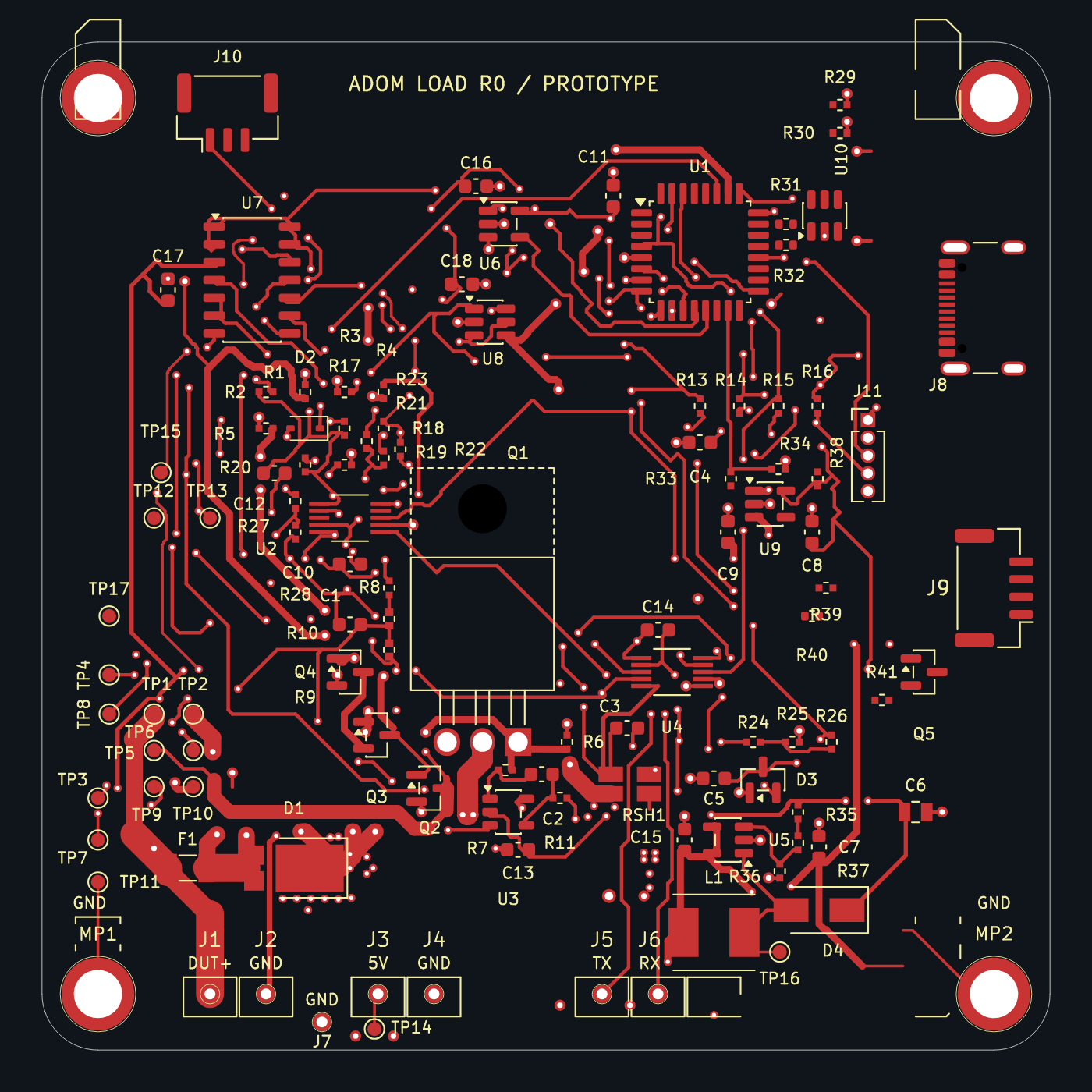+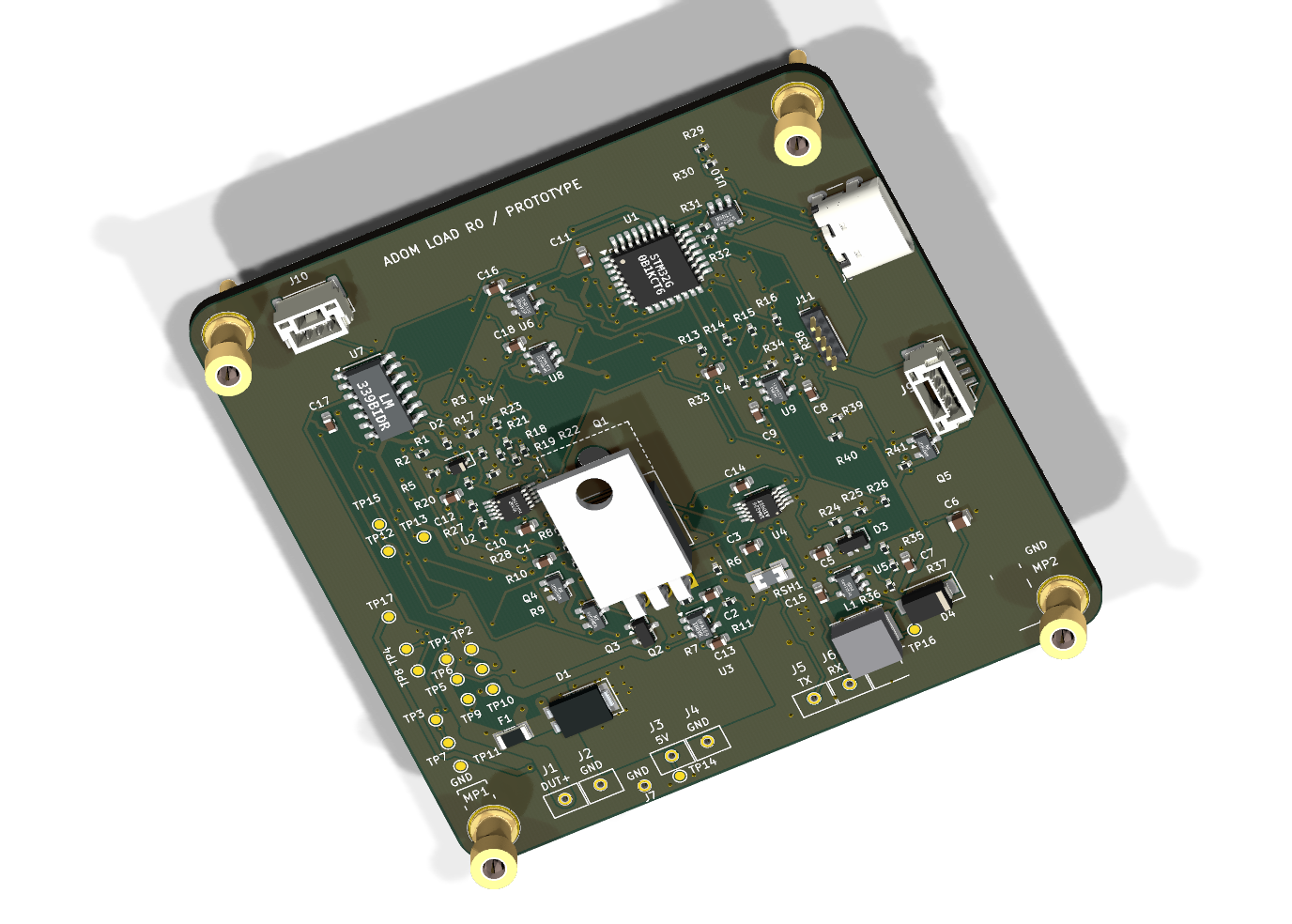 -This image is rendered from a native KiCad SVG export, not a live editor screenshot. This earlier placement snapshot precedes the routing checkpoint. The fan/heatsink assembly is not shown here and still requires fit and probe validation.+This image is a native KiCad CPU rendering of the saved compact v4 board, with copper and silkscreen. The fan/heatsink assembly is not shown here and still requires fit and probe validation. ## Implemented and checked @@ -33,7 +33,7 @@ The fan runtime test confirms off-pose stability, rotor-only motion, fixed housi The v4 filled-copper solve at 0.1 mm passes the current gate on all six loaded nets, including a 0.5 A auxiliary design budget. This is current screening, not cooling qualification. All 112 v4 placements have also been verified in the isolated native editor. -**Probe clearance claim withdrawn:** the 21-touch replay reported no collisions, but a subsequent cooler-reservation test exposed incorrect slab detection: a 4 × 4 mm board corner was treated as the whole PCB, silently excluding larger obstacles. The checker is being repaired and both board-only and assembled replay require fresh evidence. The auxiliary wire adjustment is retained as a candidate, not accepted clearance proof.+**Probe clearance claim withdrawn:** the 21-touch replay reported no collisions, but a subsequent cooler-reservation test exposed incorrect slab detection: a 4 × 4 mm board corner was treated as the whole PCB, silently excluding larger obstacles. The isolated fix now includes 95 previously omitted board primitives: the bare board still passes, but the proposed sink/fan reservations cause 24 collisions and 6 snags. AIFlow has returned to placement. [Repair and replay evidence](../../revisions/compact-r11/probing-checker-repair.md). The auxiliary wire adjustment is retained as a candidate, not accepted clearance proof. Published component pages now include the [fan](https://wiki.adom.inc/adom/cfm-4010-03-22), [board header](https://wiki.adom.inc/adom/bm04b-ghs-tbt) and [cable housing](https://wiki.adom.inc/adom/ghr-04v-s). The fan runtime supports rotor-only RPM motion; animation is illustrative telemetry, not measured fan behavior.
revisions/compact-r11/evidence/probe-collide-v4-fixed.logadded+11@@ -0,0 +1,11 @@+collisions over 219.1 s of the run (14385 poses, the head's real surface vs 4634 parts at their real shapes, 4 panel wires and the seated ground pin): 0 collision episode(s); ground wire: 712 solves, 0 snag(s)+ closest: probe module to MP1 10.46 mm at 123.36 s+OK: no collisions and no ground-wire snags over the whole run+Hint: workcell fact: collide: sweeps the exact replay the dashboard plays (every 20 ms) with Stephen's V2 head posed as the twin poses it: the probe module and pogo at the tip, the pincer module and moving jaw at tip + (-20.85, -49.14), each body's own mesh boxes; obstacles are the board model's parts above its surface, the routed panel wires and the seated ground pin+Hint: workcell fact: collide: intended contacts are not collisions: the plunger on the pad it is touching, the jaws and pincer on the ground pin they hold; everything else that overlaps by more than 0.05 mm is a collision, named by body, part, test and time+Hint: workcell fact: collide: the ground wire is solved every 0.25 s with the parts nearest the pin-to-tip line as obstacles (the solver takes 16 boxes, 5 are the probe module); a wire node inside any part is a snag, a wire lying on a part is reported as resting on it+Hint: workcell fact: collide: a collision on a pad landing or a pincer near the GND contact is a BOARD change (move the part or the pad in adom-aiflow) and must be fixed before the board is ordered; a collision while traversing is a workcell change (safe Z) or a route change (panel wires)+Hint: workcell fact: collide: boxes are axis-aligned bounds of each part's mesh, so a hit can be a near miss on a round or L-shaped body: look at the moment in the dashboard (scrub to the reported t) before moving parts+Hint: next step coverage: Run `adom-aiflow-probing coverage`. It decides from the board's own topology what must be measured (VIN on the board, VOUT, the switch node at the inductor's input, the inductor's output side, feedback, every bulk capacitor with the biggest one required, BOOT and EN, every indicator LED as a camera check, the panel supply into the board, a free GND contact for the probe's ground pin) and, for each, whether the probe can really land there: test points first, then the outer half of a component pad, checked for tip fit, short risk, the probe body against the heights of nearby parts, and the ground tether's reach. Read every line that is not OK. A required gap is a BOARD change: go back to adom-aiflow (`adom-aiflow-probing step coverage --back --flow board --why "<gap>"`), add the test point at the printed free spot or move the blocking part, finish the board again, re-run init, access and coverage. Component-pad landings and 'near' verdicts are allowed, but tell the human which ones and recommend test points where it is cheap. Only the human accepts a gap (`coverage --accept <id> --why`). Do not move on while coverage reports a required gap.+OK: external command completed; its running time is in this session+Hint: Use exec for build, browser automation and other work outside AI Flow. Do not start an idle heartbeat; only actual work counts.
revisions/compact-r11/evidence/probe-cooling-reservation-fixed.logadded+96@@ -0,0 +1,96 @@+collisions over 219.1 s of the run (14385 poses, the head's real surface vs 4636 parts at their real shapes, 4 panel wires and the seated ground pin): 24 collision episode(s); ground wire: 712 solves, 6 snag(s)+ 13.25-23.11 s pogo plunger hits a board part at (34.0, 39.0) 27.26 mm setup+ 13.42-23.11 s pogo barrel hits a board part at (34.0, 39.0) 24.8 mm setup+ 13.79-23.13 s probe module hits a board part at (34.0, 39.0) 19.53 mm setup+ 16.54-20.62 s pincer module hits a board part at (34.0, 10.7) 27.17 mm setup+ 22.97-23.16 s probe module hits a board part at (34.0, 10.7) 11.47 mm aux-start+ 42.26-42.32 s pogo barrel hits a board part at (34.0, 10.7) 26.95 mm aux-start+ 42.26-42.32 s pogo plunger hits a board part at (34.0, 10.7) 29.41 mm aux-start+ 42.26-42.45 s probe module hits a board part at (34.0, 10.7) 21.69 mm aux-start+ 62.63-72.12 s probe module hits a board part at (34.0, 10.7) 23.91 mm off-state-survey+ 62.65-72.02 s probe module hits a board part at (34.0, 39.0) 23.22 mm off-state-survey+ 166.46-166.64 s probe module hits a board part at (34.0, 10.7) 21.69 mm off-state-survey+ 166.58-166.63 s pogo barrel hits a board part at (34.0, 10.7) 26.95 mm off-state-survey+ 166.59-166.63 s pogo plunger hits a board part at (34.0, 10.7) 29.41 mm off-state-survey+ 186.13-186.16 s probe module hits a board part at (34.0, 10.7) 21.69 mm shutdown+ 194.80-194.97 s probe module hits a board part at (34.0, 10.7) 21.69 mm shutdown+ 194.92-194.97 s pogo barrel hits a board part at (34.0, 10.7) 26.95 mm shutdown+ 194.92-194.96 s pogo plunger hits a board part at (34.0, 10.7) 29.41 mm shutdown+ 199.68-199.76 s pogo barrel hits a board part at (34.0, 10.7) 26.95 mm shutdown+ 199.68-199.92 s probe module hits a board part at (34.0, 10.7) 21.69 mm shutdown+ 199.69-199.76 s pogo plunger hits a board part at (34.0, 10.7) 29.41 mm shutdown+ 199.77-209.41 s probe module hits a board part at (34.0, 39.0) 19.53 mm shutdown+ 199.78-209.74 s pogo barrel hits a board part at (34.0, 39.0) 24.8 mm shutdown+ 199.78-209.89 s pogo plunger hits a board part at (34.0, 39.0) 27.26 mm shutdown+ 201.43-206.88 s pincer module hits a board part at (34.0, 10.7) 27.44 mm shutdown+ closest: pogo plunger to a board part at (34.0, 39.0) 0.0 mm at 13.43 s+ closest: pogo barrel to a board part at (34.0, 39.0) 0.0 mm at 15.12 s+ closest: probe module to a board part at (34.0, 39.0) 0.0 mm at 15.76 s+ closest: pincer module to a board part at (34.0, 10.7) 0.0 mm at 202.52 s+ERROR: 30 collision(s) or snag(s)+Hint: pogo plunger hits a board part at (34.0, 39.0), 27.26 mm below its top, at 13.25-23.11 s (setup: lower both Z axes straight down over J7, the ground pin going into it)+Hint: pogo barrel hits a board part at (34.0, 39.0), 24.8 mm below its top, at 13.42-23.11 s (setup: lower both Z axes straight down over J7, the ground pin going into it)+Hint: probe module hits a board part at (34.0, 39.0), 19.53 mm below its top, at 13.79-23.13 s (setup: lower both Z axes straight down over J7, the ground pin going into it)+Hint: pincer module hits a board part at (34.0, 10.7), 27.17 mm below its top, at 16.54-20.62 s (setup: the Z gantry's pincers lower the ground pin into J7 (GND) until its 0.51 mm tail is in (2.15 mm of it), open 50/50 and rise clear)+Hint: probe module hits a board part at (34.0, 10.7), 11.47 mm below its top, at 22.97-23.16 s (aux-start: move to TP7 (3V3))+Hint: pogo barrel hits a board part at (34.0, 10.7), 26.95 mm below its top, at 42.26-42.32 s (aux-start: move to TP15 (VREF_2V5))+Hint: pogo plunger hits a board part at (34.0, 10.7), 29.41 mm below its top, at 42.26-42.32 s (aux-start: move to TP15 (VREF_2V5))+Hint: probe module hits a board part at (34.0, 10.7), 21.69 mm below its top, at 42.26-42.45 s (aux-start: move to TP15 (VREF_2V5))+Hint: probe module hits a board part at (34.0, 10.7), 23.91 mm below its top, at 62.63-72.12 s (off-state-survey: move to TP13 (SHUNT_N_SENSE))+Hint: probe module hits a board part at (34.0, 39.0), 23.22 mm below its top, at 62.65-72.02 s (off-state-survey: move to TP13 (SHUNT_N_SENSE))+Hint: probe module hits a board part at (34.0, 10.7), 21.69 mm below its top, at 166.46-166.64 s (off-state-survey: move to TP14 (5V_AUX))+Hint: pogo barrel hits a board part at (34.0, 10.7), 26.95 mm below its top, at 166.58-166.63 s (off-state-survey: move to TP14 (5V_AUX))+Hint: pogo plunger hits a board part at (34.0, 10.7), 29.41 mm below its top, at 166.59-166.63 s (off-state-survey: move to TP14 (5V_AUX))+Hint: probe module hits a board part at (34.0, 10.7), 21.69 mm below its top, at 186.13-186.16 s (shutdown: move to TP5 (GATE))+Hint: probe module hits a board part at (34.0, 10.7), 21.69 mm below its top, at 194.8-194.97 s (shutdown: move to TP14 (5V_AUX))+Hint: pogo barrel hits a board part at (34.0, 10.7), 26.95 mm below its top, at 194.92-194.97 s (shutdown: move to TP14 (5V_AUX))+Hint: pogo plunger hits a board part at (34.0, 10.7), 29.41 mm below its top, at 194.92-194.96 s (shutdown: move to TP14 (5V_AUX))+Hint: pogo barrel hits a board part at (34.0, 10.7), 26.95 mm below its top, at 199.68-199.76 s (shutdown: back over J7 to pull the ground pin)+Hint: probe module hits a board part at (34.0, 10.7), 21.69 mm below its top, at 199.68-199.92 s (shutdown: back over J7 to pull the ground pin)+Hint: pogo plunger hits a board part at (34.0, 10.7), 29.41 mm below its top, at 199.69-199.76 s (shutdown: back over J7 to pull the ground pin)+Hint: probe module hits a board part at (34.0, 39.0), 19.53 mm below its top, at 199.77-209.41 s (shutdown: back over J7 to pull the ground pin)+Hint: pogo barrel hits a board part at (34.0, 39.0), 24.8 mm below its top, at 199.78-209.74 s (shutdown: back over J7 to pull the ground pin)+Hint: pogo plunger hits a board part at (34.0, 39.0), 27.26 mm below its top, at 199.78-209.89 s (shutdown: back over J7 to pull the ground pin)+Hint: pincer module hits a board part at (34.0, 10.7), 27.44 mm below its top, at 201.43-206.88 s (shutdown: the pincers come straight down around the ground pin in J7, close 50/50 and lift it out)+Hint: the ground wire snags a board part at (34.0, 10.7) by 0.26 mm at 22.25 s (aux-start)+Hint: the ground wire snags a board part at (34.0, 39.0) by 0.26 mm at 22.25 s (aux-start)+Hint: the ground wire snags a board part at (34.0, 10.7) by 0.26 mm at 61.75 s (off-state-survey)+Hint: the ground wire snags a board part at (34.0, 39.0) by 0.26 mm at 101.75 s (off-state-survey)+Hint: the ground wire snags a board part at (34.0, 10.7) by 0.26 mm at 186.25 s (shutdown)+Hint: the ground wire snags a board part at (34.0, 39.0) by 0.26 mm at 190.75 s (shutdown)+Hint: the probe (pogo plunger) hits a board part at (34.0, 39.0): raise safe Z in the workcell profile above a board part at (34.0, 39.0)'s height if it happens while traversing; if it happens while landing on a pad, the pad is too close to a board part at (34.0, 39.0) for the probe module: move the pad or a board part at (34.0, 39.0) in the board flow+Hint: the probe (pogo barrel) hits a board part at (34.0, 39.0): raise safe Z in the workcell profile above a board part at (34.0, 39.0)'s height if it happens while traversing; if it happens while landing on a pad, the pad is too close to a board part at (34.0, 39.0) for the probe module: move the pad or a board part at (34.0, 39.0) in the board flow+Hint: the probe (probe module) hits a board part at (34.0, 39.0): raise safe Z in the workcell profile above a board part at (34.0, 39.0)'s height if it happens while traversing; if it happens while landing on a pad, the pad is too close to a board part at (34.0, 39.0) for the probe module: move the pad or a board part at (34.0, 39.0) in the board flow+Hint: the pincer hits a board part at (34.0, 10.7) while handling the ground pin: the jaws come down beside the pin, so the parts around the GND contact must be lower than the jaw tips' path. Fix in the board flow: move a board part at (34.0, 10.7) away from the ground contact, or use another free GND contact (plan.ground)+Hint: the probe (probe module) hits a board part at (34.0, 10.7): raise safe Z in the workcell profile above a board part at (34.0, 10.7)'s height if it happens while traversing; if it happens while landing on a pad, the pad is too close to a board part at (34.0, 10.7) for the probe module: move the pad or a board part at (34.0, 10.7) in the board flow+Hint: the probe (pogo barrel) hits a board part at (34.0, 10.7): raise safe Z in the workcell profile above a board part at (34.0, 10.7)'s height if it happens while traversing; if it happens while landing on a pad, the pad is too close to a board part at (34.0, 10.7) for the probe module: move the pad or a board part at (34.0, 10.7) in the board flow+Hint: the probe (pogo plunger) hits a board part at (34.0, 10.7): raise safe Z in the workcell profile above a board part at (34.0, 10.7)'s height if it happens while traversing; if it happens while landing on a pad, the pad is too close to a board part at (34.0, 10.7) for the probe module: move the pad or a board part at (34.0, 10.7) in the board flow+Hint: the probe (probe module) hits a board part at (34.0, 10.7): raise safe Z in the workcell profile above a board part at (34.0, 10.7)'s height if it happens while traversing; if it happens while landing on a pad, the pad is too close to a board part at (34.0, 10.7) for the probe module: move the pad or a board part at (34.0, 10.7) in the board flow+Hint: the probe (probe module) hits a board part at (34.0, 10.7): raise safe Z in the workcell profile above a board part at (34.0, 10.7)'s height if it happens while traversing; if it happens while landing on a pad, the pad is too close to a board part at (34.0, 10.7) for the probe module: move the pad or a board part at (34.0, 10.7) in the board flow+Hint: the probe (probe module) hits a board part at (34.0, 39.0): raise safe Z in the workcell profile above a board part at (34.0, 39.0)'s height if it happens while traversing; if it happens while landing on a pad, the pad is too close to a board part at (34.0, 39.0) for the probe module: move the pad or a board part at (34.0, 39.0) in the board flow+Hint: the probe (probe module) hits a board part at (34.0, 10.7): raise safe Z in the workcell profile above a board part at (34.0, 10.7)'s height if it happens while traversing; if it happens while landing on a pad, the pad is too close to a board part at (34.0, 10.7) for the probe module: move the pad or a board part at (34.0, 10.7) in the board flow+Hint: the probe (pogo barrel) hits a board part at (34.0, 10.7): raise safe Z in the workcell profile above a board part at (34.0, 10.7)'s height if it happens while traversing; if it happens while landing on a pad, the pad is too close to a board part at (34.0, 10.7) for the probe module: move the pad or a board part at (34.0, 10.7) in the board flow+Hint: the probe (pogo plunger) hits a board part at (34.0, 10.7): raise safe Z in the workcell profile above a board part at (34.0, 10.7)'s height if it happens while traversing; if it happens while landing on a pad, the pad is too close to a board part at (34.0, 10.7) for the probe module: move the pad or a board part at (34.0, 10.7) in the board flow+Hint: the probe (probe module) hits a board part at (34.0, 10.7): raise safe Z in the workcell profile above a board part at (34.0, 10.7)'s height if it happens while traversing; if it happens while landing on a pad, the pad is too close to a board part at (34.0, 10.7) for the probe module: move the pad or a board part at (34.0, 10.7) in the board flow+Hint: the probe (probe module) hits a board part at (34.0, 10.7): raise safe Z in the workcell profile above a board part at (34.0, 10.7)'s height if it happens while traversing; if it happens while landing on a pad, the pad is too close to a board part at (34.0, 10.7) for the probe module: move the pad or a board part at (34.0, 10.7) in the board flow+Hint: the probe (pogo barrel) hits a board part at (34.0, 10.7): raise safe Z in the workcell profile above a board part at (34.0, 10.7)'s height if it happens while traversing; if it happens while landing on a pad, the pad is too close to a board part at (34.0, 10.7) for the probe module: move the pad or a board part at (34.0, 10.7) in the board flow+Hint: the probe (pogo plunger) hits a board part at (34.0, 10.7): raise safe Z in the workcell profile above a board part at (34.0, 10.7)'s height if it happens while traversing; if it happens while landing on a pad, the pad is too close to a board part at (34.0, 10.7) for the probe module: move the pad or a board part at (34.0, 10.7) in the board flow+Hint: the probe (pogo barrel) hits a board part at (34.0, 10.7): raise safe Z in the workcell profile above a board part at (34.0, 10.7)'s height if it happens while traversing; if it happens while landing on a pad, the pad is too close to a board part at (34.0, 10.7) for the probe module: move the pad or a board part at (34.0, 10.7) in the board flow+Hint: the probe (probe module) hits a board part at (34.0, 10.7): raise safe Z in the workcell profile above a board part at (34.0, 10.7)'s height if it happens while traversing; if it happens while landing on a pad, the pad is too close to a board part at (34.0, 10.7) for the probe module: move the pad or a board part at (34.0, 10.7) in the board flow+Hint: the probe (pogo plunger) hits a board part at (34.0, 10.7): raise safe Z in the workcell profile above a board part at (34.0, 10.7)'s height if it happens while traversing; if it happens while landing on a pad, the pad is too close to a board part at (34.0, 10.7) for the probe module: move the pad or a board part at (34.0, 10.7) in the board flow+Hint: the probe (probe module) hits a board part at (34.0, 39.0): raise safe Z in the workcell profile above a board part at (34.0, 39.0)'s height if it happens while traversing; if it happens while landing on a pad, the pad is too close to a board part at (34.0, 39.0) for the probe module: move the pad or a board part at (34.0, 39.0) in the board flow+Hint: the probe (pogo barrel) hits a board part at (34.0, 39.0): raise safe Z in the workcell profile above a board part at (34.0, 39.0)'s height if it happens while traversing; if it happens while landing on a pad, the pad is too close to a board part at (34.0, 39.0) for the probe module: move the pad or a board part at (34.0, 39.0) in the board flow+Hint: the probe (pogo plunger) hits a board part at (34.0, 39.0): raise safe Z in the workcell profile above a board part at (34.0, 39.0)'s height if it happens while traversing; if it happens while landing on a pad, the pad is too close to a board part at (34.0, 39.0) for the probe module: move the pad or a board part at (34.0, 39.0) in the board flow+Hint: the pincer hits a board part at (34.0, 10.7) while handling the ground pin: the jaws come down beside the pin, so the parts around the GND contact must be lower than the jaw tips' path. Fix in the board flow: move a board part at (34.0, 10.7) away from the ground contact, or use another free GND contact (plan.ground)+Hint: pogo plunger passes over a board part at (34.0, 39.0) with only 0.00 mm to spare (t 13.4 s): no collision, but a 0.5 mm placement or homing error closes it+Hint: pogo barrel passes over a board part at (34.0, 39.0) with only 0.00 mm to spare (t 15.1 s): no collision, but a 0.5 mm placement or homing error closes it+Hint: probe module passes over a board part at (34.0, 39.0) with only 0.00 mm to spare (t 15.8 s): no collision, but a 0.5 mm placement or homing error closes it+Hint: pincer module passes over a board part at (34.0, 10.7) with only 0.00 mm to spare (t 202.5 s): no collision, but a 0.5 mm placement or homing error closes it+Hint: the ground wire lies on a board part at (34.0, 10.7), a board part at (34.0, 39.0) while the probe works (on them, not through them): fine for a springy 24 AWG lead, but each one is a part it is dragged across on a move+Hint: workcell fact: collide: sweeps the exact replay the dashboard plays (every 20 ms) with Stephen's V2 head posed as the twin poses it: the probe module and pogo at the tip, the pincer module and moving jaw at tip + (-20.85, -49.14), each body's own mesh boxes; obstacles are the board model's parts above its surface, the routed panel wires and the seated ground pin+Hint: workcell fact: collide: intended contacts are not collisions: the plunger on the pad it is touching, the jaws and pincer on the ground pin they hold; everything else that overlaps by more than 0.05 mm is a collision, named by body, part, test and time+Hint: workcell fact: collide: the ground wire is solved every 0.25 s with the parts nearest the pin-to-tip line as obstacles (the solver takes 16 boxes, 5 are the probe module); a wire node inside any part is a snag, a wire lying on a part is reported as resting on it+Hint: workcell fact: collide: a collision on a pad landing or a pincer near the GND contact is a BOARD change (move the part or the pad in adom-aiflow) and must be fixed before the board is ordered; a collision while traversing is a workcell change (safe Z) or a route change (panel wires)+Hint: workcell fact: collide: boxes are axis-aligned bounds of each part's mesh, so a hit can be a near miss on a round or L-shaped body: look at the moment in the dashboard (scrub to the reported t) before moving parts+ERROR: external command failed: /home/adom/project/load-r11-probing-obstacle-fix/target/release/adom-aiflow-probing (exit status: 1)+Hint: Inspect the command output above, fix the reported failure and retry with adom-aiflow exec -- <program> <args>. The failed command's time is retained.
revisions/compact-r11/kicad/compact-v4-review.pngadded⋯ 1 unchanged line ⋯
revisions/compact-r11/probing-checker-repair.mdadded+16@@ -0,0 +1,16 @@+# Cooler collision review returned R11 to placement++The original 0.2.24 probe collision result was invalid: the checker treated a 4×4 mm corner primitive as the board slab, then discarded larger objects by area. Earlier clearance claims were withdrawn and success receipts removed.++An isolated candidate fix aggregates coplanar board fragments, checks their XY bounds against the transformed PCB outline, and includes large coolers and brackets crossing below the board. Fifteen workspace tests passed, including two new obstacle regressions. The release build passed. [Owner issue #3](https://wiki.adom.inc/adom/adom-aiflow-probing/issues/3) and [source PR #3](https://wiki.adom.inc/adom/adom-aiflow-probing/prs/3) contain reproduction and validation. The shared installation and running simulator were not changed.++| Replay | Old checker obstacles | Corrected obstacles | Corrected collisions | Corrected snags |+|---|---:|---:|---:|---:|+| v4 board only | 4,539 | 4,634 | 0 | 0 |+| v4 plus sink/fan body reservations | 4,539 | 4,636 | 24 | 6 |++The corrected slab is 72×72 mm. The two added bodies demonstrably enter the obstacle set. They are only dimensional reservations: ATS mounting ears, clamp, sensor, duct and routed fan leads remain absent. Neither replay qualifies the assembled product.++During ground-pin insertion into J7, the paired probe descends into the proposed heatsink. TP14 travel crosses the fan. AIFlow has returned to placement to explore moving J7 and TP14 into the left access corridor. The original v4 checkpoint remains intact. The first relocation candidate has native clearance/connection failures and is being repaired; it is not a released PCB.++All geometry is nominal and subject to workcell/profile assumptions. A passing corrected replay will remain a screen, not physical assembly qualification.